
Authors: Gordon Burrows, Head of Control Centre, Natural Power; and Graeme Booth, Domain Technology Lead at Fred. Olsen Renewables
The energy control centre of the future will look different, operate differently and carry greater responsibility than today’s control rooms. As renewable generation, battery energy storage and increasingly sophisticated electricity markets transform the energy system, control centres are evolving from monitoring hubs into critical infrastructure responsible for coordinating complex, interconnected assets in real time.
This evolution brings opportunities to improve efficiency, unlock flexibility and support the transition to a low-carbon electricity system. However, greater connectivity, automation and reliance on digital infrastructure also increase exposure to cyber threats, while the consequences of operational disruption become more significant as electricity underpins an expanding range of essential services.
The next generation of control centres must do more than monitor and respond. They must anticipate, adapt, protect and recover, combining intelligent technology with the technical expertise and human judgement needed to maintain safe, reliable operations locally, nationally an internationally.
From monitoring assets to managing system complexity
Traditionally, energy control centres have focused on monitoring renewable assets, managing performance, responding to faults and ensuring grid compliance. These responsibilities remain fundamental, but the operating environment is changing rapidly.
Wind and solar generation, battery energy storage systems (BESS), evolving balancing markets and increasingly complex grid connections are creating a more dynamic electricity system. Operators must coordinate asset availability with network constraints, market signals, electrical safety requirements and instructions from the National Energy System Operator (NESO).
Control centres are also taking on broader responsibilities, potentially extending beyond monitoring and control into forecasting, trading, market interaction and the delivery of sophisticated grid services.
Battery storage illustrates this shift. Its value depends not only on technical capability, but on when and how it charges, discharges and responds to changing system requirements. Delivering that value requires coordination between operational decisions, market opportunities, connection constraints and asset performance.
At Natural Power’s ControlCentre, we manage more than 300 projects and support over 12GW of renewable generation (onshore and offshore), alongside a 6GW grid-balancing portfolio. Last year, our team responded to more than 110,000 NESO instructions. This demonstrates the scale and pace of decision-making already required to operate within a changing energy system.
Cybersecurity must become operational resilience
As control centres become more connected, cybersecurity is rightly receiving greater attention. However, the industry needs to look beyond preventing attacks towards a broader concept: operational resilience.
Cyber threats, including increasingly sophisticated attacks enabled by artificial intelligence (AI), will continue to evolve. No organisation can assume its systems will remain entirely untouched by attempted compromise. The question is therefore not simply whether an attack can be prevented, but whether operations can remain safe and continue when defences are challenged.
This requires a shift in how resilience is measured. The absence of attacks is an unrealistic benchmark; the ability to detect threats, contain their impact, maintain essential services and recover quickly is a more meaningful measure of success.
Control Centres are moving from monitoring assets to managing system complexity; resilience, not just prevention, is the right measure of cyber security; and greater automation only works when people remain in control and able to intervene.
Future control centres will need robust contingency arrangements, secure alternative operating environments, rapid failover capabilities and procedures for continuing operations under degraded conditions. Recovery and restart must be designed into systems from the outset.
Regular exercises will be essential. Simulated cyber incidents can test not only technology, but also decision-making, communications and responsibilities under pressure. Restoring trusted operations quickly will be just as important as the initial security response.
AI is both the threat and part of the defence
AI will add another dimension to this challenge. As malicious actors use increasingly intelligent tools to identify vulnerabilities and automate attacks, operators will need equally sophisticated capabilities to detect threats and limit their consequences.
AI-enabled monitoring can analyse large volumes of data, identify unusual behaviour and help security teams recognise patterns that might otherwise go unnoticed. Automated responses may also isolate suspicious activity or move affected services into a more secure environment before an incident escalates.
However, AI cannot be treated as an infallible safeguard. Protective systems must themselves be tested, monitored and governed carefully.
The principle of zero trust will become increasingly important. Rather than assuming a user, device or application can be trusted because it is already inside a network, every connection should be authenticated and verified according to its risk. Humans and machines alike must demonstrate that they are authorised to access the systems and information they need.
Combined with secure communications, encryption and robust access controls, this approach can reduce the impact of compromised accounts, vulnerable devices and unauthorised connections.
Protecting critical national infrastructure
The electricity system is fundamental to modern society. As dependence on reliable electricity grows, so does the strategic importance of the infrastructure responsible for generating, transmitting and balancing power.
Control centres need to be designed and operated with the consequences of disruption firmly in mind. In our experience, that starts with a clear understanding of the regulatory, contractual and sector-specific security requirements that apply to each operation, since these differ more than many teams expect.
This extends beyond protecting servers and networks. Communications between people, assets and control systems must remain secure and reliable, with safeguards against interception, disruption or manipulation. Resilient arrangements must also account for individual networks or channels becoming unavailable.
Resilience has to be designed into the whole control centre, not just the servers. That means physical infrastructure, digital platforms, communications, access management, operational procedures and the people who use them.
Much of this infrastructure will be invisible to operators, but its reliability underpins every operational decision. Security cannot be an additional layer applied at the end of a project; it must be embedded in the design.
Greater autonomy, with people still in control
Increased automation will be another defining feature of future control centres.
As information flows faster and operational decisions become more complex, automated systems will increasingly support dispatch, curtailment, fault response and storage coordination. Within defined operating limits, automation can improve consistency, reduce response times and minimise human error.
However, machines can also make mistakes, act on inaccurate information or encounter circumstances beyond their design parameters. An automated decision that is appropriate in one scenario may be unsuitable in another.
Human expertise will therefore remain essential, although its role will evolve. Rather than carrying out every routine action manually, operators will increasingly supervise automated processes, assess exceptions and intervene when conditions move beyond expected parameters.
This requires clear operating boundaries, escalation procedures and visibility of what automated systems are doing and why. Operators must be able to understand the situation, challenge decisions and take control when necessary.
The objective is not to remove people from control centres, but to apply their expertise where it adds the greatest value: interpreting complexity, exercising judgement and managing the unexpected.
A different control room, built on an invisible foundation
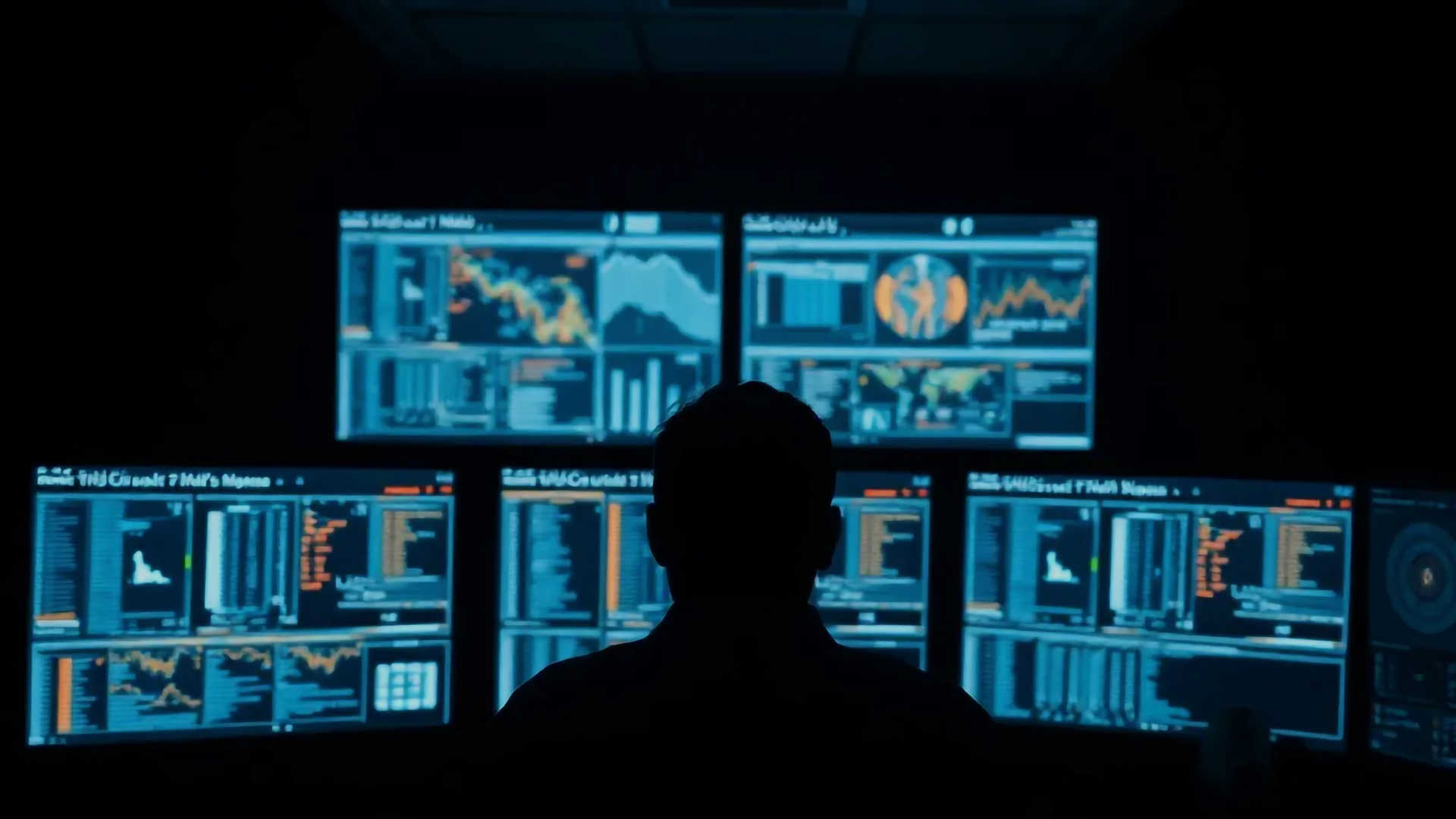
The most visible change in a future control centre may be how information is presented.
Rather than overwhelming operators with separate screens and disconnected data feeds, integrated visualisations will increasingly provide an immediate understanding of the overall system, with the ability to examine individual assets or emerging problems in greater detail.
Operators need to identify what matters, understand how events are connected and recognise where intervention is required. Well-designed interfaces can transform large volumes of operational data into actionable information, supporting faster, more confident decisions.
Yet the most significant advances may be less visible. Behind these interfaces will sit sophisticated digital infrastructure, secure communications, resilient data platforms and intelligent automation designed to maintain operations during disruption.
The challenge is ensuring technological complexity does not create operational confusion. Digital tools should simplify decision-making, not obscure it. Their value lies in helping people understand the system and act appropriately, particularly when conditions change rapidly.
Building resilience into the energy transition
The energy system will continue to evolve as renewable generation expands, storage deployment increases and electricity demand patterns change. The growth of data centres and AI infrastructure is a clear example: it could introduce significant new demand while also creating demand-side flexibility. Control centres will be where those competing pressures are balanced in real time, which makes coordinating them an increasingly important part of system operation.
Preparing for this future means investing in more than technology. Control centres need resilient architecture, secure communications, well-rehearsed recovery arrangements, appropriately governed automation and teams equipped to operate in a more complex environment.
Collaboration is equally important. Asset owners, operators, technology providers, market participants and system operators must work together to ensure operational strategies, security arrangements and technical capabilities remain aligned as the system changes. For asset owners such as Fred. Olsen Renewables, that means setting clear expectations for resilience and oversight; for service providers like Natural Power, it means delivering them in real-time.
Our experience of operating renewable assets and supporting grid balancing reinforces the importance of bringing these disciplines together. Reliable energy system operation depends not only on the assets themselves, but also on the expertise, systems and decisions connecting them.
The next generation of energy control centres will be defined not simply by how much data they process or how many tasks they automate, but by how effectively they combine flexibility, security and human judgement.
Ultimately, future control centres must be ready for routine operations and exceptional events alike. They must help the electricity system respond intelligently to changing conditions, maintain essential services during disruption and recover quickly when things go wrong.
As the energy transition accelerates, this combination of operational capability and resilience will become increasingly important. The infrastructure behind the control room may be largely invisible, but its contribution will be fundamental to delivering a secure, flexible and low-carbon energy system.