Lessons from Neart na Gaoithe
As offshore wind projects grow in scale, ambition and scrutiny, environmental delivery has become one of the defining factors in project success. The experience of the Neart na Gaoithe (NnG) Offshore Wind Farm demonstrates that environmental and consenting work does not end once a project receives consent — in many ways, that is when the complexity truly begins.
For Natural Power, the NnG project has become a powerful example of how embedded environmental expertise, regulatory agility and collaborative delivery can help major infrastructure projects navigate evolving requirements while protecting programme, reputation and long-term outcomes.
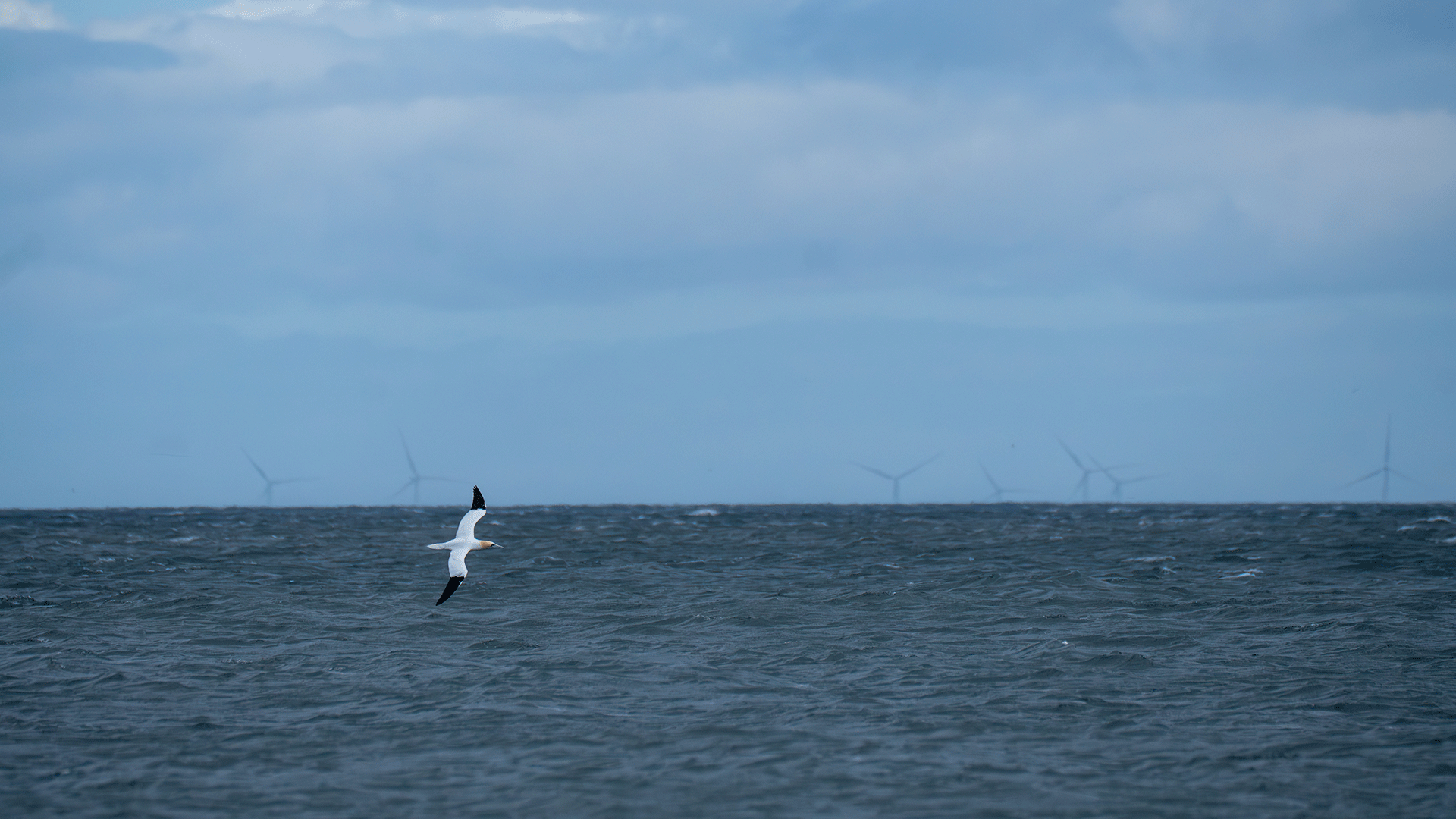
Located approximately 15.5km off the Fife coast in the outer Firth of Forth, NnG is one of Scotland’s most significant offshore wind developments. The project has faced a uniquely complex journey, shaped by engineeringchallenges, evolving environmental regulations, extensive stakeholder scrutiny and the realities of delivering a major offshore project in a rapidly maturing industry.
Throughout the journey from construction to operations, Natural Power supported the project across multiple workstreams, providing environmental, consenting and advisory expertise that evolved alongside the project itself.
A project where complexity continued after consent
One of the clearest lessons from NnG is that consent is not the finish line.
While environmental impact assessment and consent applications often receive the greatest visibility during development, the operational reality is that environmental obligations intensify during project delivery. Post-consent discharge requirements, monitoring programmes, licence compliance, fisheries engagement, construction interfaces and regulator engagement continue throughout construction, and requirements often evolve throughout the lifecycle of a project.
For NnG, that complexity was amplified by the duration of the project and the pace of change within offshore wind regulation and environmental expectations.
As the offshore wind sector has matured, regulators, stakeholders and developers alike have had to adapt to changing guidance, new evidence, increasing biodiversity expectations and more rigorous scrutiny of cumulative impacts.
This created a moving regulatory landscape that required continuous interpretation, adaptation and delivery management.
Embedded expertise driving delivery
A key factor in supporting the successful delivery of NnG was the secondment of Michelle Elliott, Principal Environmental Consultant at Natural Power, into the project team.
Working directly within the delivery environment enabled Michelle to support day-to-day decision making, coordinate across technical and regulatory interfaces and help ensure environmental consenting requirements remained aligned with construction realities and programme pressures.
This embedded model provided continuity throughout periods of regulatory change and delivery complexity, while also helping bridge the gap that can often emerge between consenting assumptions and onsite implementation.
Michelle’s role also supported proactive engagement with regulators and stakeholders, helping the project team respond quickly to emerging issues and maintain confidence across multiple parties.
As offshore wind projects become larger and more complex, this kind of integrated environmental expertise is increasingly critical. Delays in licence discharge, monitoring approvals or compliance delivery can create significant programme impacts, commercial pressure and reputational risk.
Managing evolving regulation in a fast-moving industry
The offshore wind sector has evolved significantly during the lifespan of NnG to date.
Environmental expectations, monitoring requirements and regulatory processes changed considerably during project delivery, reflecting broader industry learning and increasing emphasis on evidence-led environmental management.
Rather than relying on static approaches established during consent, projects increasingly require adaptive management, ongoing interpretation of regulatory expectations and continuous collaboration with regulators and advisers.
Natural Power supported NnG through this evolving landscape by providing offshore consents support, fisheries liaison and marine mammal observer services, ECoW (Environmental Clerk of Works) provision, due diligence, additional licensing support and wider advisory support across multiple stages of the project lifecycle.
This included helping to manage environmental obligations, supporting stakeholder engagement and assisting the project team in navigating complex consenting and compliance requirements during construction and through the transition into the operational phase of the project including the Offshore Transmission Owner (OfTO) tender process.
The breadth of support reflected a wider industry reality: environmental delivery is not a standalone workstream. It is deeply connected to programme management, commercial delivery, stakeholder confidence and operational risk.
Innovation supporting better outcomes
The NnG experience also reflects the growing role of innovation in environmental delivery.
As offshore wind projects expand in size and complexity, digital tools and new monitoring approaches are becoming increasingly important in improving efficiency, transparency and regulatory confidence.
Natural Power has been actively involved in developing approaches that support more effective environmental management across offshore wind projects, including the development of digital consent tracking tools in partnership with KUDO Software.
Digital consent tracking enables project teams to manage large volumes of environmental commitments, licence conditions and monitoring requirements more effectively, reducing the risk of missed obligations or programme delays.
Natural Power also supported innovation in environmental monitoring techniques, including pioneering eDNA sampling approaches that were first developed at Blyth Offshore Wind Farm. These methods have the potential to transform how species monitoring is undertaken by improving data collection efficiency while reducing survey impact and cost.
Together, these innovations demonstrate how technology and environmental expertise can work together to improve both compliance and environmental outcomes.
Real-world delivery challenges. And the lessons learned.
The NnG project reinforces several important lessons for the offshore wind sector.
First, environmental delivery must be resourced and managed as a long-term operational function, not simply a development-stage requirement.
Second, regulatory change should be expected, particularly in a growing industry where scientific understanding, policy and stakeholder expectations continue to evolve.
Third, poor environmental delivery carries consequences that extend well beyond compliance. Delays, reputational damage, stakeholder conflict and programme disruption can all emerge when consent obligations are underestimated or poorly integrated into project delivery.
Projects that succeed are increasingly those that embed environmental expertise into delivery teams, maintain strong regulator relationships and invest in systems and innovation that enable agile, transparent management.
Client perspective
Helen Walker, Head of Consents at EDF Power Solutions said: “The Neart na Gaoithe project has required an enormous level of environmental coordination and regulatory engagement over many years. Natural Power’s support has been invaluable throughout that process. The team brought not only deep technical expertise, but also a practical understanding of delivery pressures and the importance of maintaining strong relationships with regulators and stakeholders. Michelle Elliott’s embedded support within the project team was particularly important in helping us navigate evolving requirements while maintaining momentum across the project.”
Supporting the future of offshore wind
As offshore wind continues to scale globally, the demands surrounding environmental delivery will only increase.
Developers are operating in an environment where regulation is evolving rapidly, biodiversity expectations are rising and projects are under increasing scrutiny from regulators, stakeholders and the public.
The experience of NnG demonstrates that successful delivery depends on more than securing consent. It requires long-term environmental consents leadership, integrated expertise and the ability to adapt in real time as projects evolve.
For Natural Power, the project reflects a broader commitment to supporting offshore wind developers through every stage of project delivery — helping manage complexity, reduce risk and create better outcomes for both projects and the environments in which they operate.