
Author: Gordon Cameron, Senior engineering technician
As wind turbine components get larger, transporting blades, tower sections and other abnormal loads from port to site is becoming more complex. Swept path analysis helps project teams assess whether these components can be moved safely through bends, junctions, access roads, site entrances and constrained terrain before issues arise on site.
Natural Power combines accurate vehicle and trailer specifications, suspension characteristics, load dimensions and terrain data within a 3D environment. This gives developers, asset owners and project teams a clearer understanding of transport risks, particularly on repowering projects where existing routes may need modification for newer, larger components.
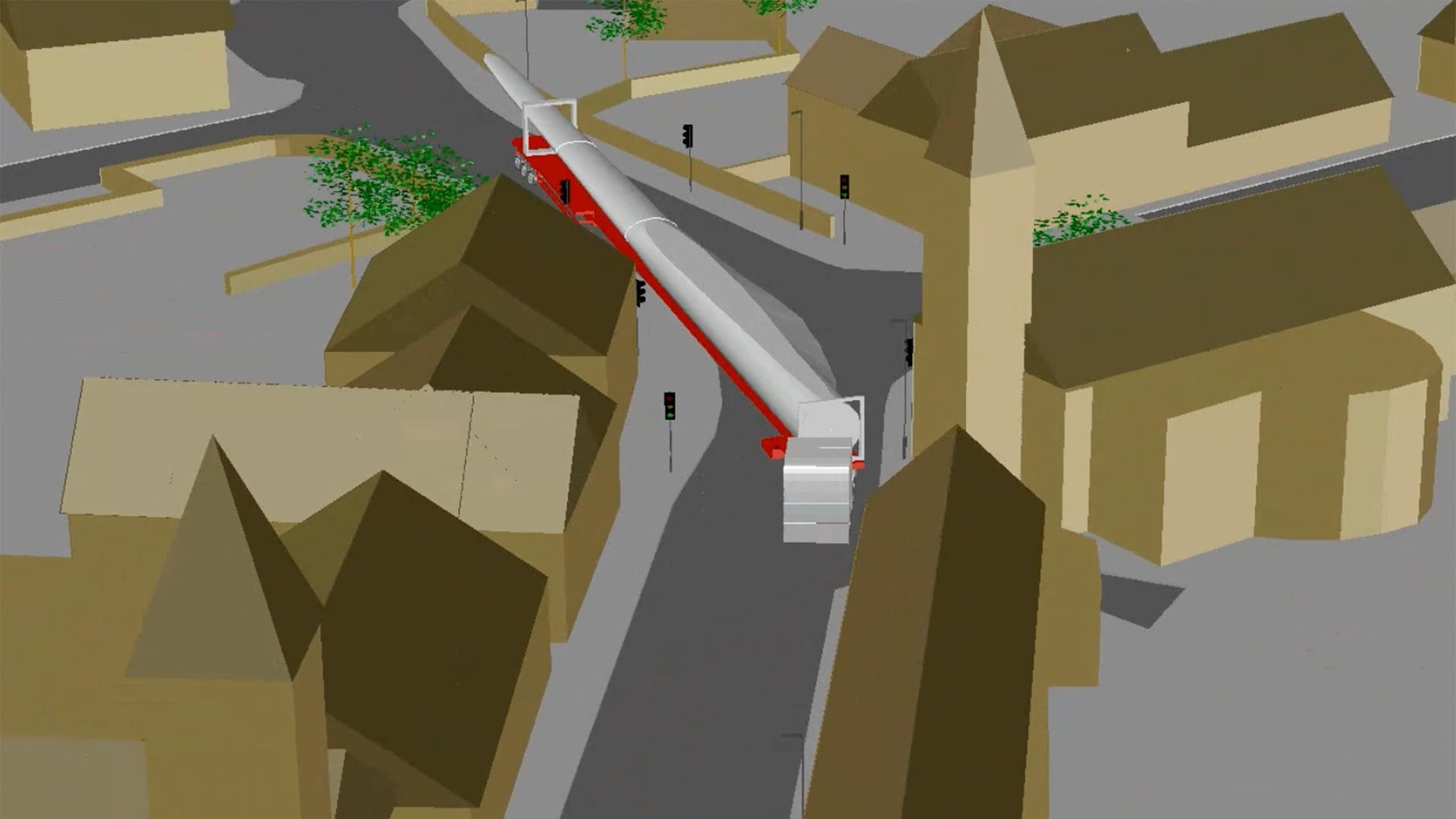
Adding 3D clash detection helps identify where a vehicle or load may conflict with the surrounding environment, including ground levels, buildings, infrastructure or embankments. These insights can highlight where road improvements, earthworks or design changes are required, helping reduce risk, minimise delays and improve cost certainty.
3D modelling and animation also make complex transport movements easier to understand for stakeholders, local authorities and project teams. The accompanying StoryMap brings this to life by showing a turbine blade being transported through a small town in northern Scotland using specialist equipment.
For more information, view Natural Power’s interactive StoryMap.