
Author: Angelika Gibula, Head of Service,
Why don’t wind turbines always turn on windy days?
It’s one of those questions that seems to come up every time the wind picks up.
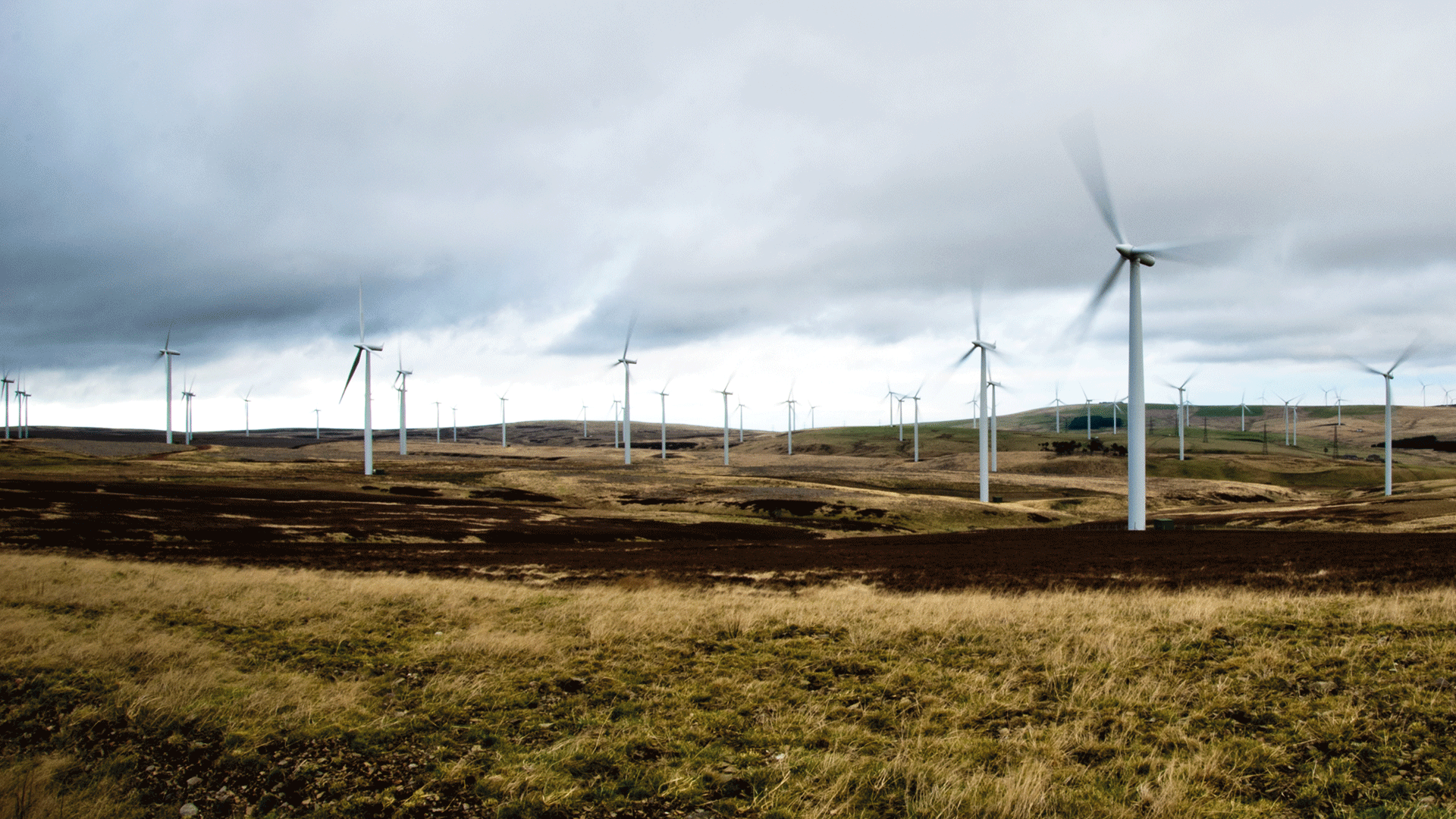
You’re driving past a wind farm, hair blown sideways, bins skating down the street… and yet a few turbines stand still.
“Must be broken,” is often the response.
In reality, a stationary wind turbine on a windy day is much more like a car pulled into a pit stop than one stranded at the roadside. Sometimes, stopping is exactly what keeps things running smoothly in the long term.
Wind turbines are clever — but not reckless
First, it helps to know that turbines aren’t designed to spin whenever the wind blows. They’re programmed to operate within a very specific wind speed range — although the exact limits vary depending on the turbine model, site conditions, and control strategy.
-
Below around 3–4 metres per second, there isn’t enough energy in the wind to generate power efficiently.
-
Between roughly 11–14 metres per second, turbines reach their rated output — this is where they are working at full capacity.
-
Above about 22–28 metres per second, turbines will shut themselves down automatically to avoid excessive loads.
-
What’s less obvious is that once a turbine reaches its rated output, it doesn’t keep producing more power as the wind strengthens. Instead, it actively adjusts the angle of its blades — through control systems constantly monitoring loads — to limit stress and maintain stable performance.
Newer turbine designs can often operate safely at higher wind speeds by actively managing loads, while older models may shut down earlier to protect key components
So yes — sometimes turbines stop because the wind is too enthusiastic. Think less “giving up” and more “knowing their limits”.
When stopping is part of the plan
Planned stoppages are also essential for keeping turbines healthy. Like any complex machine operating day in, day out — often in remote, exposed locations — turbines need regular attention.
This is where servicing and maintenance teams come in, ensuring turbines deliver maximum performance, longevity, and safety over their working lives.
At Natural Power, this work blends engineering expertise with real‑world practicality — and a good dose of problem solving.
A closer look at turbine maintenance (without the hard hat)
So what might be happening when a turbine isn’t turning?
Routine servicing
Just like your car’s MOT, turbines undergo scheduled inspections. These include checking mechanical components, lubricating moving parts, tightening bolts, and ensuring systems are operating as designed. Stopping a turbine for a few hours now can prevent days — or weeks — of downtime later.
Condition monitoring & diagnostics
Modern turbines are constantly sending performance data. Maintenance teams analyse trends in vibration, temperature, and output to spot issues early — often before they’re visible from the ground. It’s quiet detective work, and it saves clients time and money.
Blade inspections and repairs
Blades may look serene from afar, but they take a beating from weather, insects, salt, and lightning. Regular inspections (increasingly using drones and rope access techniques) check for erosion or damage that could impact efficiency or safety if left unaddressed.
Electrical and control systems
Turbines rely on sophisticated electrical and software systems to operate safely and efficiently. Sensors, converters, and control cabinets — all need occasional TLC. A temporary pause allows engineers to update, repair, or recalibrate systems that keep turbines responsive to changing conditions.
Health, safety, and access
Sometimes turbines are stopped simply because conditions aren’t safe for technicians to access them — high winds, ice, or restricted visibility. Safety isn’t an afterthought; it’s fundamental. Waiting for the right moment is part of doing the job properly.
When it’s not about the turbine at all
Sometimes, turbines are stopped even when the wind is perfect — and the reason isn’t the turbine itself.
Wind farms operate as part of a wider electricity system, and the grid must stay balanced at all times. If there is more electricity being generated than the network can safely carry or use, some turbines may be instructed to reduce output or stop altogether — a process known as curtailment.
In the UK, this can happen through instructions from the system operator via balancing actions (often referred to in the industry as Bid–Offer Acceptances, or BOAs), helping manage supply and demand in real time.
So even on a blustery day, a turbine may be paused not because it can run — but because, at that moment, the system doesn’t need the extra power.
Preventative care beats reactive repair — every time
The key takeaway? A stationary turbine isn’t a sign of neglect — it’s often evidence of good stewardship.
Preventative maintenance reduces unplanned outages, protects high‑value components, and ensures turbines continue performing efficiently across decades, not just years. It’s the difference between firefighting and foresight.
Natural Power’s servicing and maintenance team specialises in this proactive approach, combining technical depth with a strong understanding of each site’s unique challenges — from coastal exposure to upland weather patterns and grid requirements.
The people behind the pause
Perhaps the most overlooked part of turbine maintenance is the human one.
Behind every planned shutdown is a team coordinating weather windows, safety systems, spare parts, access routes, and client priorities. It’s meticulous, often invisible work — but it’s essential to keeping renewable energy reliable.
When turbines are turning, nobody notices.
When they pause, people ask questions.
The answer, more often than not, is reassuring: someone knowledgeable is doing exactly what’s needed to keep them running well for the long term.
So next time you spot a still turbine…
Remember — wind energy isn’t about spinning as fast as possible at all times. It’s about balancing performance, safety, and longevity.
And sometimes, the smartest thing a turbine can do on a windy day… is stop, briefly — so it can keep delivering clean energy for years to come.