
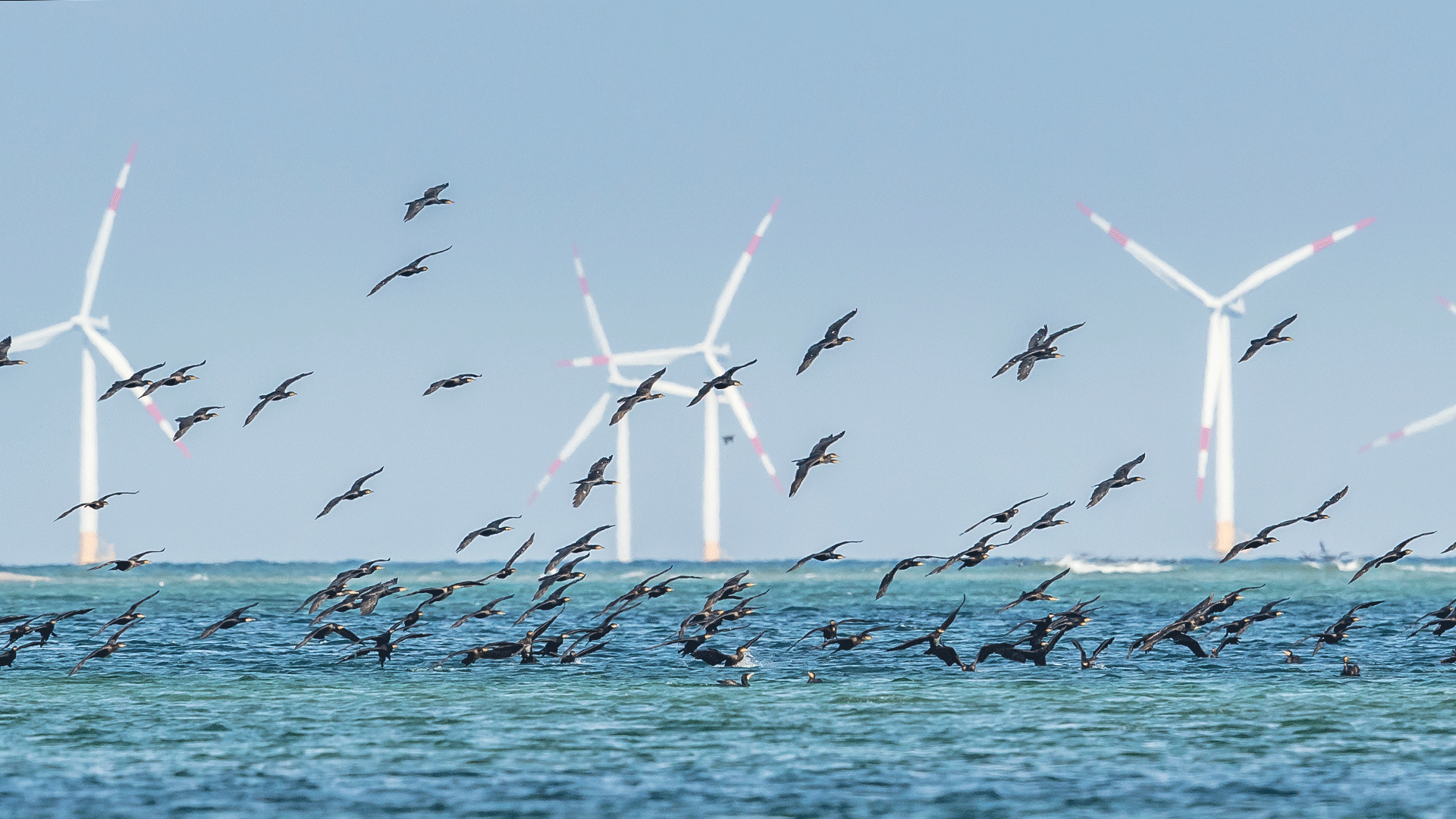
We have completed work on the updated Ornithological Cumulative Assessment Model (OCcAM) offshore wind seabird mortality tool — a free, transparent and practical resource designed to support early-stage impact assessment across the offshore wind sector.
OCcAM is a simple, Excel-based tool that provides rapid, indicative predictions of the potential impacts of offshore wind farms on seabirds. Built on established methodologies used in UK environmental impact assessments (EIA) and habitats regulations assessments (HRA), the tool enables users to generate consistent and transparent estimates of collision risk and distributional effects for multiple seabird species.
Originally funded and developed by SSE Renewables, OCcAM has now been transferred to the Offshore Wind Industry Council (OWIC) as a free-to-use industry tool. OWIC has supported further development to expand its scope, with Natural Power delivering the update on behalf of SSE Renewables and OWIC.
The latest version of OCcAM now incorporates nine key species relevant to offshore wind projects: lesser black-backed gull, great black-backed gull, herring gull, Manx shearwater, black-legged kittiwake, common guillemot, razorbill, Atlantic puffin and northern gannet.
Designed with simplicity and transparency in mind, OCcAM includes embedded biometric parameters and flight height distributions, while allowing users to input bird density data, and parameterise models with several development scenarios. This makes it particularly valuable during scoping, early consultation and optioneering phases, where rapid and indicative assessments are required to inform design decisions and stakeholder discussions.
The tool has been tested with UK statutory nature conservation bodies (SNCBs), who have endorsed its use in pre-application screening. By aligning with existing assessment frameworks and promoting consistency of approach, OCcAMsupports clearer dialogue between developers, consultants, regulators and advisors.
Gillian Vallejo, Principal Ecological Modeller at Natural Power, said: “OCcAM has been developed to provide a simple, transparent and consistent way of estimating seabird risk at an early stage of project development. By drawing on established assessment approaches and making them accessible in a user-friendly format, the tool helps improve confidence and clarity in early discussions around potential impacts.”
The OCcAM tool and user guide can be accessed for free here:
https://www.owic.org.uk/resources/occam-offshore-wind-seabird-mortality-tool-user-guide/
To support industry uptake, we are set to host a live demonstration webinar on 25th February at 1pm–2pm GMT, providing an overview of the tool, its updates and practical guidance on its application. Offshore wind developers, consultants, regulators and their advisors are encouraged to attend.
To register for the free webinar, please visit:
https://events.teams.microsoft.com/event/71650631-c0c8-49cc-aff0-394abc5de26e@12c71663-198f-4546-b2bc-720f259de17d