
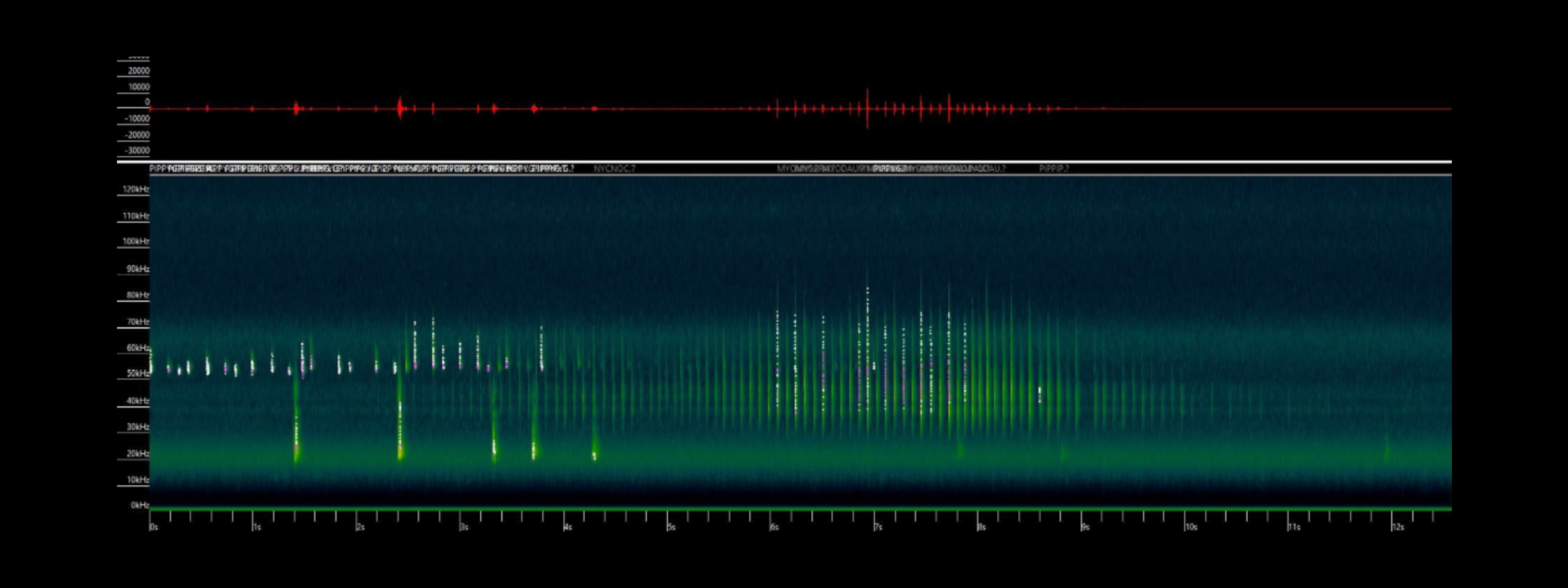
Renewable energy projects need robust evidence of how wildlife uses a site, both during ecological impact assessment and through post-consent monitoring. Some ecological receptors and their signs are straightforward to observe, but others are active when visual surveys are difficult or leave little visible evidence. For nocturnal species such as bats and migrating birds, ecologists therefore use technology to detect activity that might otherwise remain hidden.
At a renewable energy site, acoustic detectors can capture the characteristic sounds made by bats, birds and other wildlife as they move through or use the available habitat. A single survey programme, however, can generate thousands of hours of recordings, creating a substantial analysis challenge.
Collecting the recordings is only the first step. Turning a large passive acoustic dataset into reliable ecological evidence requires efficient processing, specialist verification and informed interpretation.
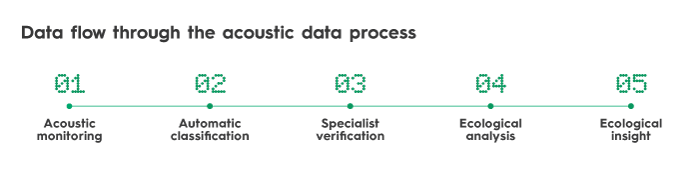
At Natural Power, our acoustic analysis team processes these datasets using automated classification followed by specialist manual verification. Automation enables us to handle large volumes of recordings efficiently, while expert review verifies classifications, identifies important records that automated tools may miss and supports robust ecological interpretation.
For developers and operators, this combined approach provides a practical route from extensive recordings to defensible evidence that can inform assessment, mitigation and operational decisions.
Natural Power uses a range of software tools and automated classifiers to analyse acoustic data. Since 2022, our toolkit has included the BTO Acoustic Pipeline (www.bto.org/pipeline), developed by scientists at the British Trust for Ornithology. The Pipeline uses machine-learning algorithms to identify acoustic signatures from bats and other wildlife.
We began investigating the Pipeline soon after its launch in 2021, evaluating its suitability for bat acoustic analysis and sharing feedback with BTO based on its application to real-world datasets. More recently, Natural Power provided early-stage feedback on BTO's new nocturnal bird migration tool and became among the first organisations to apply it in a commercial setting.
The Pipeline is particularly useful when recordings contain sounds from other wildlife, including bush-crickets and small terrestrial mammals, that some classifiers may misidentify. Its unusual-detection flags and classification confidence scores help our specialists prioritise recordings for verification, investigate unexpected results and increase confidence in the final identifications.
Species identification is only one part of the picture. By combining acoustic technology with expert interpretation, we can reveal patterns in activity, timing and behaviour; understand how wildlife uses a site; and provide evidence to help assess and mitigate risks associated with construction and other human activities.
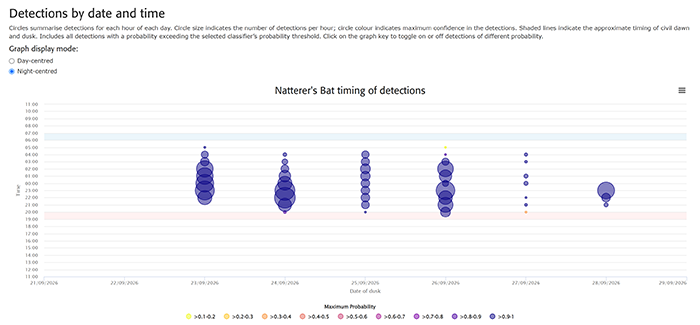
Sample plot
Natural Power's acoustic team has contributed to bat and bird studies across onshore and offshore projects and in the UK, Ireland, France and Azerbaijan. Our work includes investigating seasonal bird and bat migration, understanding when and how bats use onshore habitats, assessing the presence and frequency of offshore bat activity, and using acoustic evidence to develop curtailment scenarios that protect bats at operational wind farms. This breadth of experience demonstrates how passive acoustic monitoring can support projects throughout development and operation.
Senior acoustic analyst and leader of Natural Power’s ecological acoustics team, Anneli Englund, says: “Acoustic monitoring enables us to investigate biodiversity at a scale, and at times, that would be difficult to achieve through visual methods alone. Automated classification tools such as the Pipeline help us manage that scale, while our specialist acoustic analysts provide the verification, analysis and ecological interpretation needed to turn recordings into useful evidence.”
As acoustic monitoring technology develops, the opportunities to extract more value from ecological recordings will continue to grow. We are expanding our acoustic capabilities and exploring new ways to turn complex datasets into clear ecological insight for renewable energy projects. Speak to our ecological acoustics team to discuss how passive acoustic monitoring could support your project.
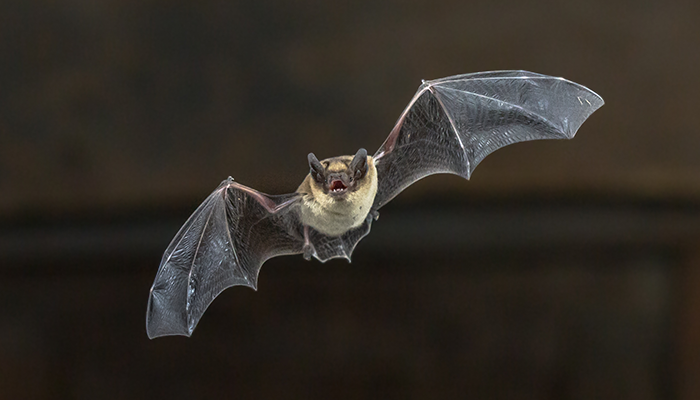
Common Pipistrelle Bat

Author: Anneli Englund, Senior ecological acoustic analyst, Natural Power