
Author: Michelle Elliott, Principal Environmental Consultant
For many years, environmental work in offshore wind was largely viewed through the lens of compliance. Developers focused on securing consent, satisfying licence conditions and meeting monitoring requirements — all essential parts of responsible project delivery.
But the industry is changing. As offshore wind scales at pace, there is growing recognition that projects must do more than minimise impact.
Developers, regulators and environmental stakeholders are increasingly exploring how offshore infrastructure can contribute positively to marine ecosystems while continuing to support the delivery of ambitious renewable energy targets.
Increasingly, the conversation is shifting towards how offshore wind can actively contribute to better environmental outcomes and support wider biodiversity objectives through nature-inclusive design.
That transition is already underway.
Nature-inclusive design is about embedding environmental enhancement into project thinking from the outset, rather than treating ecology as a constraint to manage later in the process.
In practical terms, this means considering opportunities to create or improve habitat, support biodiversity and enhance ecological function alongside engineering and commercial objectives. Importantly, it also means integrating these considerations early in project design and consenting processes rather than attempting to retrofit environmental enhancements later in the project lifecycle.
In offshore wind, that can include more adaptive species monitoring, habitat enhancement opportunities, lower-impact survey methodologies and designing projects in ways that better support ecosystem resilience throughout the lifecycle of a development.
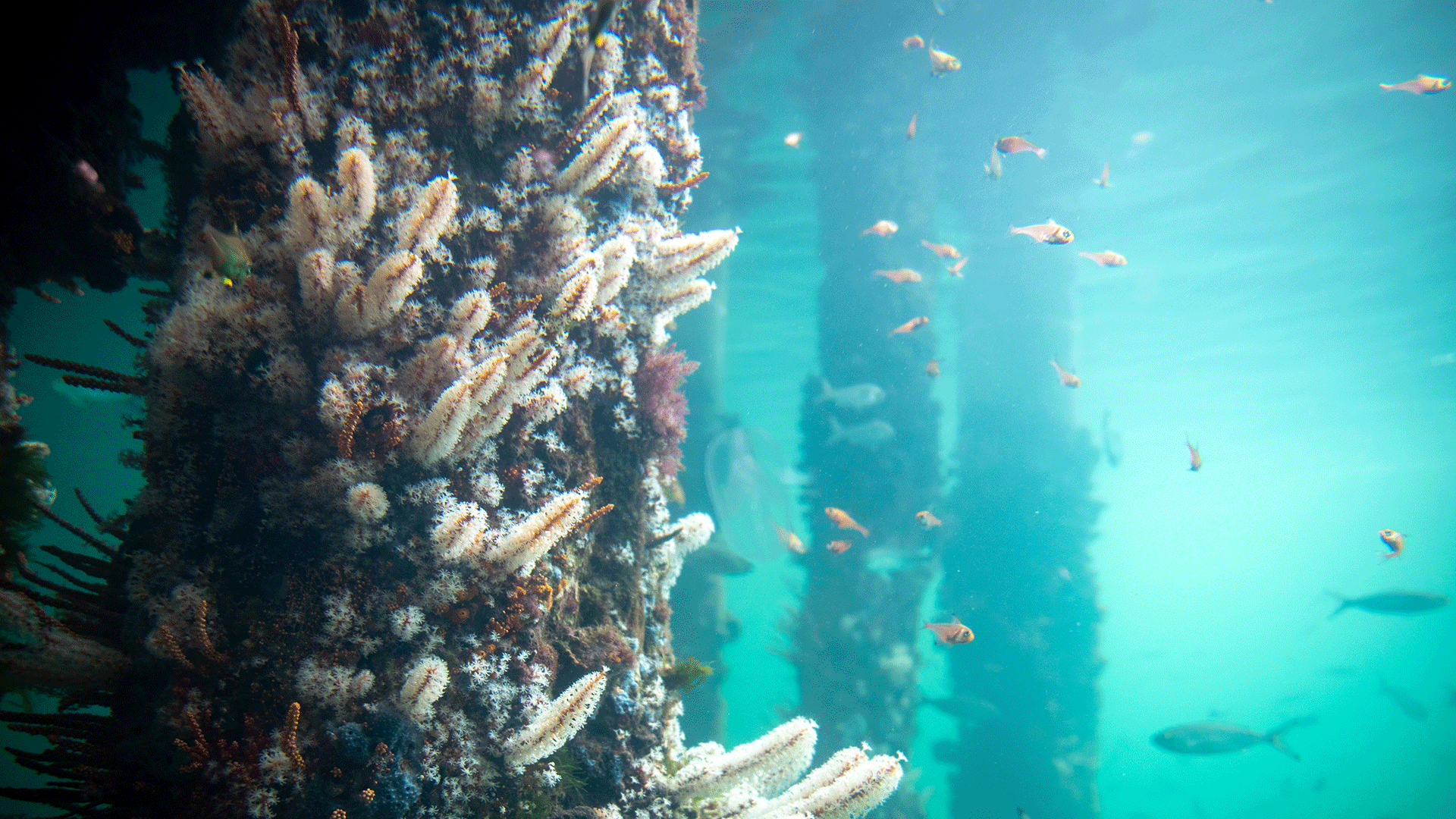
Examples range from enhancements to scour protection and the introduction of artificial reef-like habitat structures around offshore infrastructure, through to nature-positive approaches for subsea cable protection and targeted measures designed to support specific ecological receptors.
Importantly, this shift is not limited to offshore wind. Across the wider renewable energy sector — including onshore wind, solar and grid infrastructure — developers are increasingly being asked to demonstrate how projects can contribute positively to biodiversity, nature recovery and long-term environmental resilience alongside delivering clean energy targets.
In offshore wind specifically, we are seeing greater collaboration between developers, regulators, environmental consultants and scientific organisations to improve how ecological data is collected, interpreted and applied throughout the project lifecycle. At the same time, innovation is helping us move beyond traditional monitoring approaches and towards more adaptive, evidence-led environmental management.
Crucially, the conversation is no longer focused solely on identifying potential impacts. It is increasingly about understanding which interventions are most likely to deliver meaningful ecological benefits, what evidence supports those approaches and how success can be measured over time.
One area where this is particularly exciting is environmental DNA (eDNA) monitoring.
At Natural Power, we have been involved in pioneering eDNA approaches for offshore wind projects, building on work first developed at Blyth Offshore Wind Farm. Rather than relying solely on conventional survey techniques, eDNA sampling enables us to detect species presence through trace genetic material found in the marine environment. eDNA can also be used in conjunction with underwater analysis to evidence biodiversity gains through nature-inclusive design implementations.
The potential benefits are significant.
Alongside more traditional monitoring techniques such as underwater video surveys, eDNA can provide valuable insights into species presence, habitat use and changes in biodiversity around offshore infrastructure. This creates new opportunities to assess whether nature-inclusive interventions are delivering the environmental outcomes they were designed to achieve.
eDNA can improve survey efficiency, reduce disruption in sensitive marine environments and provide valuable additional insight into species distribution and ecosystem change. Importantly, it also supports a more responsive and scalable approach to monitoring as offshore wind deployment accelerates.
This kind of innovation is central to the future of nature-inclusive design. Better environmental data enables developers, regulators and stakeholders to make more informed decisions about how projects are designed, delivered and managed over time.
Of course, implementing nature-inclusive design is not simply about selecting a solution from a catalogue. Every project presents different environmental, engineering and operational considerations. The most effective approaches are those that combine ecological objectives with technical feasibility, site-specific constraints and a clear understanding of the available scientific evidence. As the sector evolves, there is growing value in independent assessment that helps developers identify solutions that are both practical and capable of delivering measurable environmental benefits.
However, innovation alone is not enough.
The future of nature-inclusive offshore wind depends on collaboration and trust between industry, regulators and environmental stakeholders. Organisations such as NatureScot play a vital role in helping shape environmental expectations and ensuring new approaches are grounded in robust science and practical application.
In my experience, the most successful projects are those where environmental considerations are embedded early, openly discussed and continuously adapted as new evidence emerges. That requires genuine partnership working and a willingness across the sector to evolve established processes.
We are also entering a period where biodiversity integration will become increasingly central to project development and delivery.
Increasingly, success will be judged not only by whether environmental impacts have been appropriately managed, but also by whether projects can demonstrate positive environmental outcomes supported by robust monitoring and evidence.
Regulators, investors and communities are placing greater emphasis on measurable positive environmental outcomes, not simply regulatory compliance.
For offshore wind developers, this presents both a challenge and an opportunity.
The challenge is that environmental expectations will continue to evolve alongside project scale and complexity. The opportunity is that offshore wind is uniquely positioned to become a catalyst for marine environmental innovation, scientific collaboration and long-term ecosystem understanding.
The projects that succeed in the future will be those that treat environmental management not as a constraint, but as an integral part of project value, long-term resilience and environmental contribution.
Nature-inclusive design will not be a universal solution to every environmental challenge, but it represents an important evolution in how the offshore wind sector approaches biodiversity. By combining scientific evidence, innovation and collaboration, the industry has an opportunity to move beyond compliance and towards delivering measurable benefits for both clean energy generation and the marine environment.
________
Michelle will be exploring these themes further during her speaking session at Global Offshore Wind 2026. More information about the event is available via RenewableUK – Global Offshore Wind 2026.