About the project
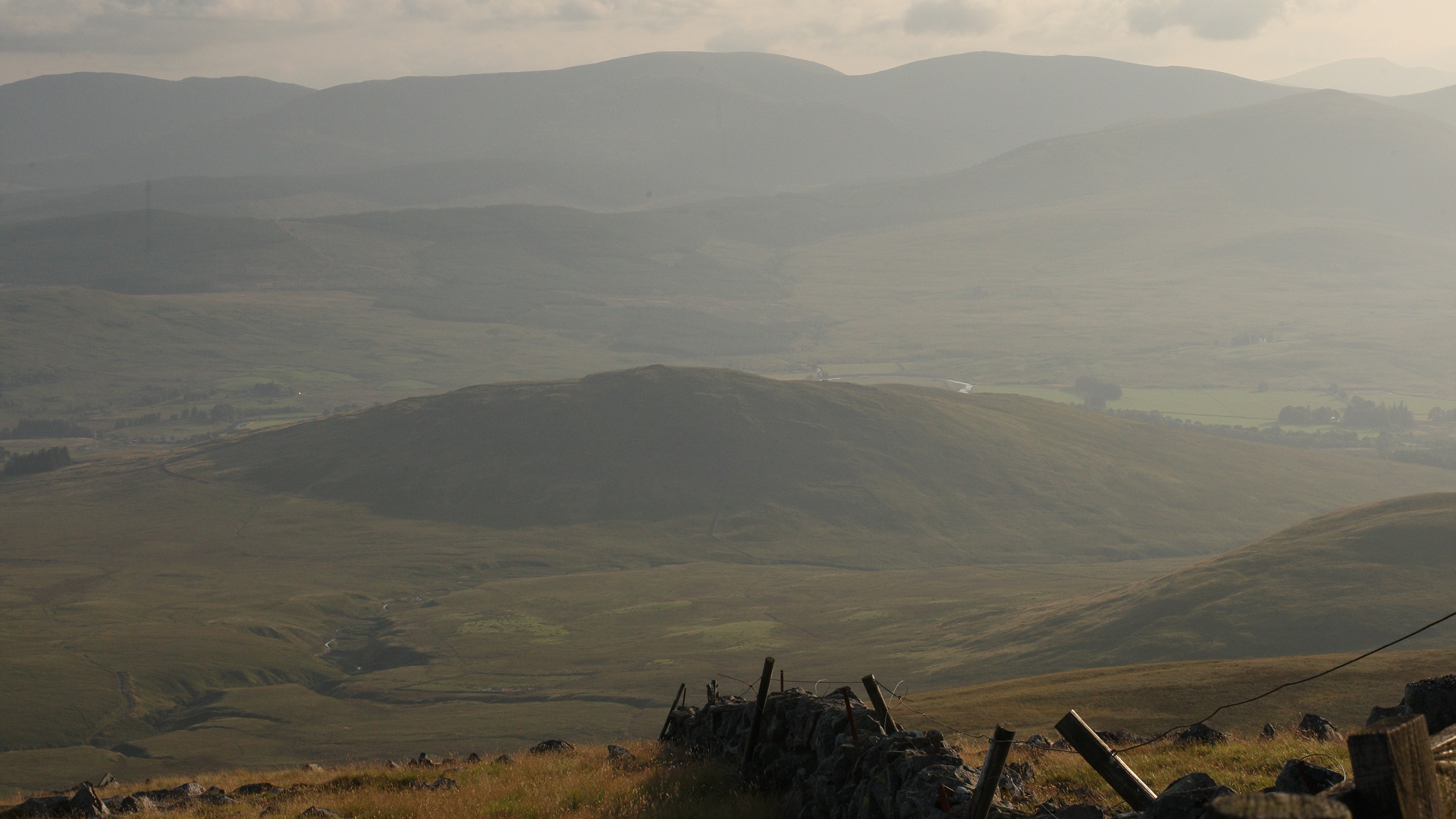
The Quantans Wind Farm & BESS development is a proposed onshore renewable energy project located around Quantans Hill, northeast of Carsphairn and east of the A713 in Dumfries and Galloway. The site is situated on predominantly southwest-facing slopes at the southern base of Cairnsmore of Carsphairn, with an elevation range of approximately 185 m to 350 m above sea level and a proposed development area of around 1,800 hectares.
The project combines onshore wind generation with battery energy storage, bringing together turbine infrastructure and flexible storage capacity within a single development. The proposal includes 14 wind turbines, up to 200 m to tip height, generating around 93 MW, alongside a BESS with an installed capacity of up to 50 MW.
What was the aim of the work?
Natural Power was appointed to prepare the Environmental Impact Assessment Report for the Quantans Wind Farm & BESS project. The aim was to assess the key environmental constraints associated with the development and help demonstrate whether the project could be delivered with acceptable environmental effects across the relevant technical topics.
The assessment needed to address a complex mix of environmental, landscape, ecological, peat, access and transport considerations. Key constraints included wide Zones of Theoretical Visibility due to rolling upland farmland and moorland, potential effects on nearby rural receptors, cumulative effects with existing and consented wind farms, sensitive peatland habitats, protected species, breeding and wintering birds, and access challenges linked to narrow rural roads and constrained structures.
For the client, the objective was to build a clear, evidence-based consenting case — one that identified the project’s environmental sensitivities, responded to them through design and mitigation, and supported the application through the Section 36 determination process.
What did Natural Power do to get this result?
Natural Power prepared the Environmental Impact Assessment Report, addressing the project’s key constraints through iterative design, mitigation by design and targeted mitigation measures.
Our work considered the landscape and visual context of the site, including the elevated landform, wide visibility, nearby rural receptors and potential cumulative effects with existing and consented wind farms. The assessment also addressed the need to demonstrate landscape capacity for the proposed turbine scale and layout, while considering cumulative visual effects, skyline views and perceived wind farm clustering.
Ecology and biodiversity were central to the assessment. The slide identifies breeding and wintering birds, including raptors and upland waders, peatland habitats such as blanket bog and wet heath, protected species including otter, badger and bats, and sensitive watercourses as key environmental considerations. Natural Power’s assessment included collision risk modelling for key bird species and careful siting to avoid deep peat.
Peat, geology and soils were also a critical focus. The project area includes carbon-rich peat and organo-mineral soils, requiring careful carbon balance consideration. Natural Power’s work included robust peat management, peat reuse and carbon payback assessments to support the environmental case for the development.
Access and transport formed another important part of the EIA. The slide identifies narrow rural roads and constrained structures as challenges for abnormal loads and construction traffic. Natural Power’s work helped demonstrate construction access feasibility and addressed traffic, safety and amenity impacts.
What was the outcome?
Natural Power’s EIA work helped demonstrate acceptable environmental effects across all key topics identified in the assessment.
The application remains awaiting determination, and the slide notes that a PLI will be convened following Dumfries and Galloway Council’s objection. Importantly, Natural Power’s work has provided the client with a robust technical evidence base to support the project through the next stage of the determination process.
Client benefit
By bringing together environmental assessment, technical analysis and mitigation-led design thinking, Natural Power helped the client navigate a challenging consenting context for a large-scale renewable energy project.
The benefit to the client was a clearer, more defensible understanding of the project’s key environmental risks and how they could be addressed. Natural Power’s approach supported the development of an EIAR that responded directly to sensitive topics including landscape and visual effects, cumulative impacts, ornithology, protected species, peat, carbon balance, abnormal load access, construction traffic and local amenity.
This gave the client a stronger platform for progressing the Section 36 application, with evidence-led assessment and mitigation embedded into the project design. While the project is not yet determined, the work provides the technical foundation needed to support the client through the PLI and final determination process.
Client Feedback
"Natural Power has been a valued partner throughout the Quantans Hill EIA and planning process. Their team provided high-quality technical and environmental support, strong project management, and pragmatic advice that helped guide the project through a complex consenting environment. We particularly appreciated their responsiveness to emerging issues, commitment to finding practical solutions, and deep local knowledge with their head office based on a few miles from the proposed development. Their professionalism and collaborative working style were instrumental in delivering a robust planning submission, and we would not hesitate to recommend Natural Power for future renewable energy developments."
Matthew Bacon, Head of Onshore Wind Market Development UK, Vattenfall